Español
By: Andrea Fossati
November, 25th, 2025
La Paz, Bolivia
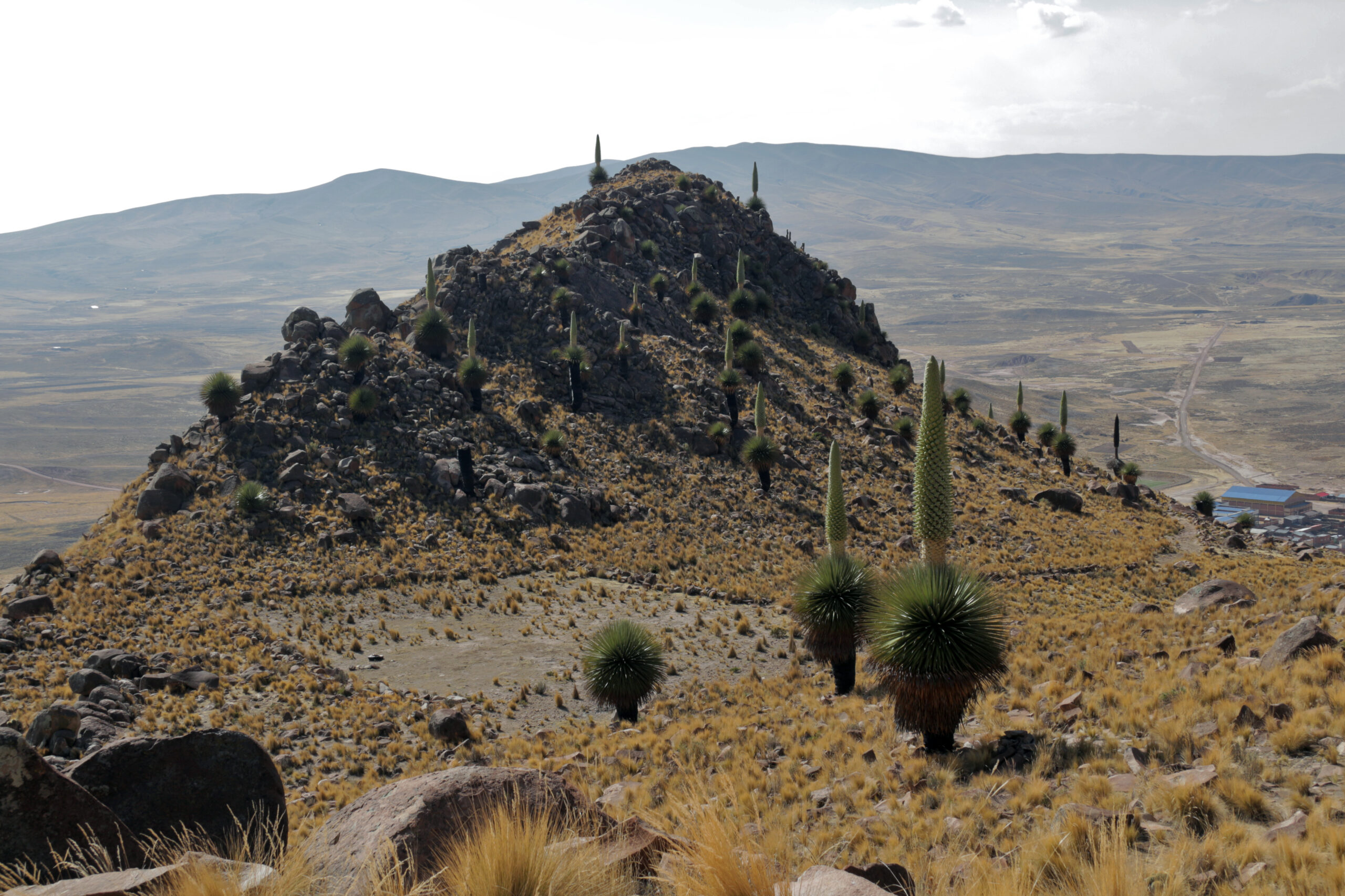
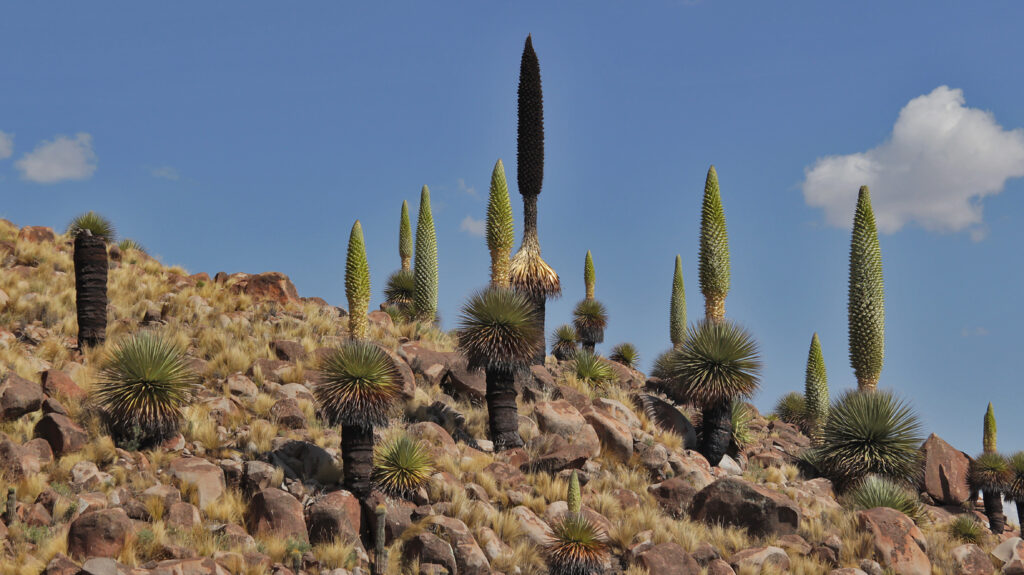
Cerro Comanche, the place where the Puya raimondii grows.
After 11 months of joint work, the National Herbarium of Bolivia, BIOTA, and SDSN Bolivia officially concluded the project “Conservation Planning and Implementation to Safeguard the Puya raimondii of Bolivia,” funded by the Critical Ecosystem Partnership Fund (CEPF). The initiative consolidated conservation actions, environmental education, and sustainable community-based tourism in one of the territories that shelters the emblematic Puya raimondii, a unique and endangered species.
The closing event included the symbolic handover of technical and educational materials to indigenous authorities, the community, and representatives of the municipal government, as well as the official inauguration of the tourist trail “Protectors of Time,” which has already welcomed its third group of visitors, with guiding fully led by the residents of Comanche.
“This project has been a true challenge and a shared learning experience. In a very short time, the Municipality of Comanche opened its doors to us and placed invaluable trust in us, making it possible to work from respect rather than imposition. The people who live alongside the Puya raimondii know it better than any scientist, and this exchange of knowledge made it possible to build a shared vision that combines science, conservation, education, and tourism. Today we feel that the seed has been planted: this initiative now belongs to Comanche, and its continuity will depend on the pride and commitment with which they care for their territory,” highlighted Carla Maldonado, Project Coordinator.
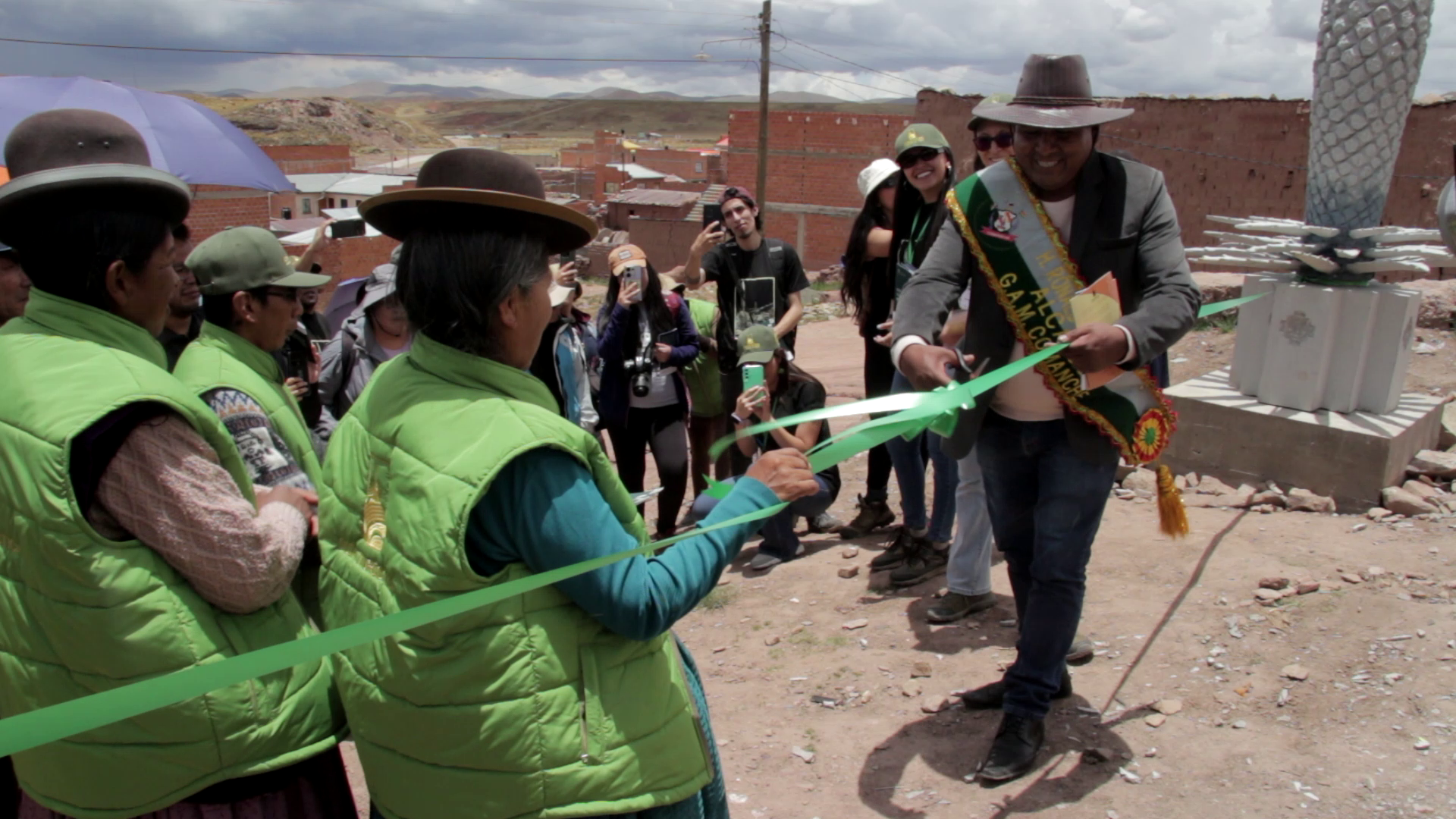
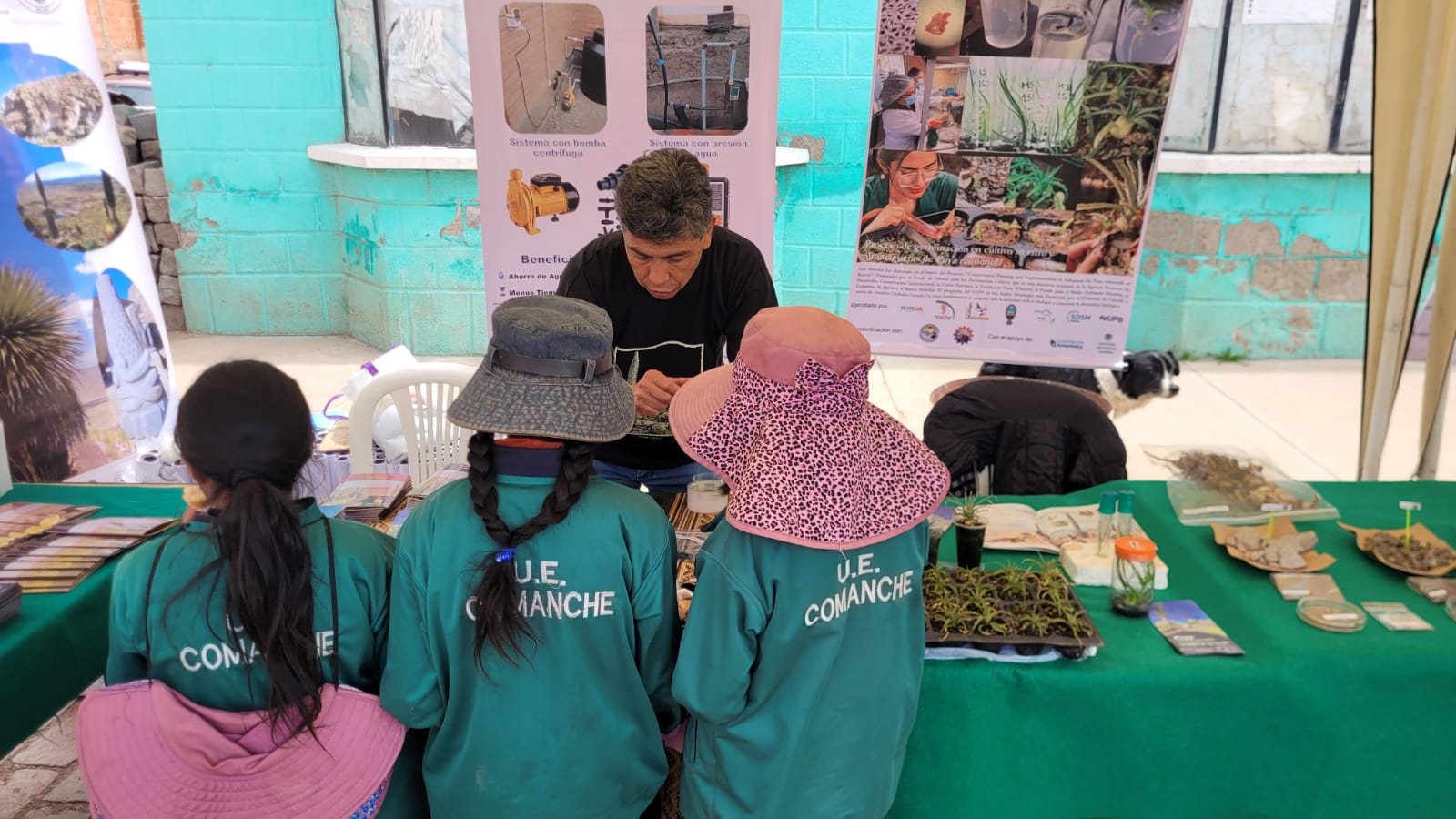
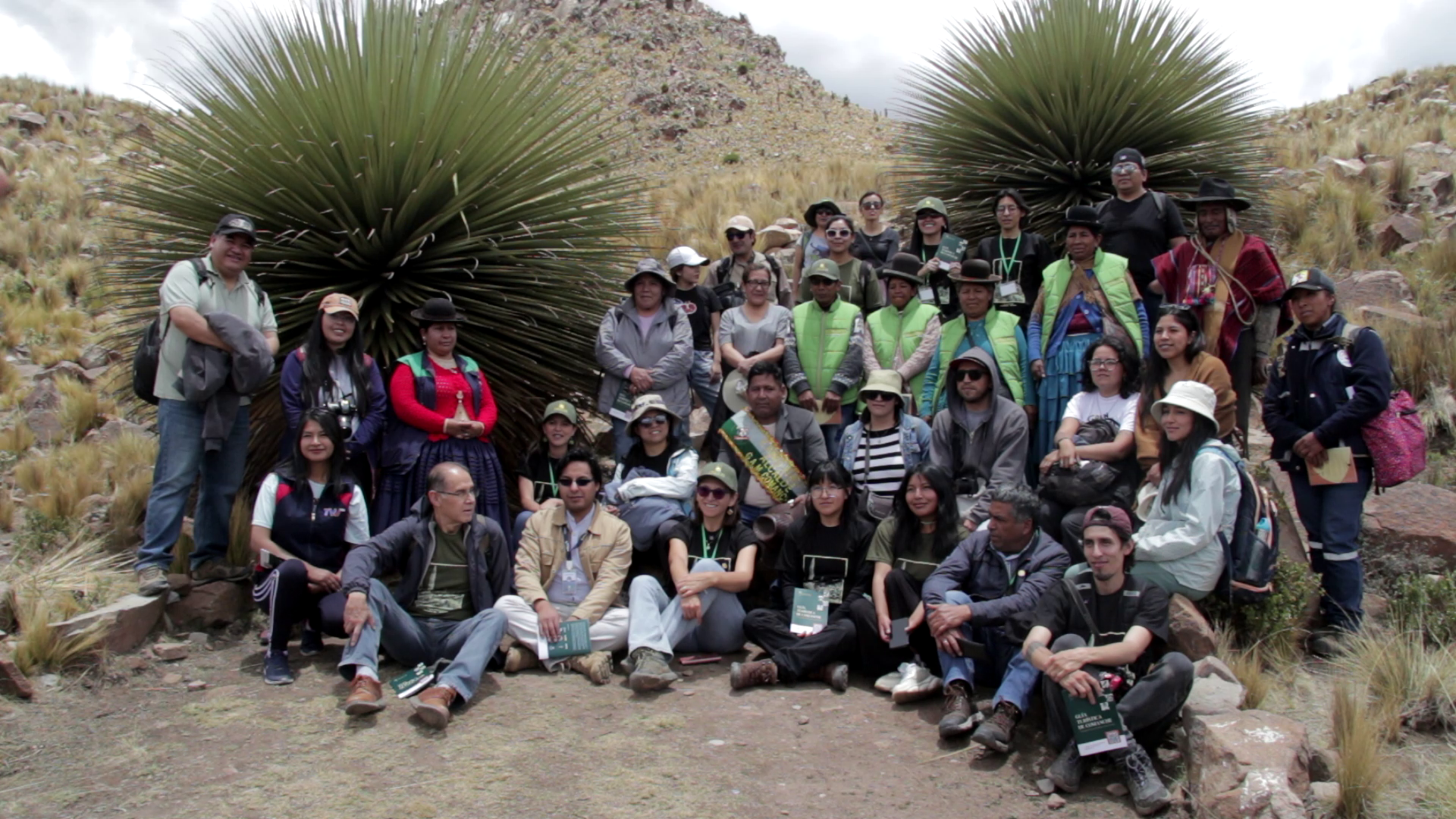
Handover of the “Protectors of Time” tourist trail and components fair.
Four Components that Strengthened Conservation and Local Identity
1. Conservation of Puya raimondii in the Flavio Machicado Wildlife Sanctuary
The project deepened ecological knowledge of Puya raimondii on Cerro de Comanche by evaluating seed viability and germination, local distribution, and its relationship with the area’s flora and fauna. Specific scientific guides were also developed, and progress was made on guidelines for a management plan for the protected area, aimed at comprehensive and participatory conservation.
2. National-Level Conservation Strategies
At the national level, other populations of Puya raimondii were assessed, and workshops were held with communities from different territories. This work made it possible to consolidate the first Action Plan for the Conservation of a Plant Species in Bolivia, currently in the approval process, which will serve as a model for future initiatives to protect threatened flora.
“With the data generated, three Key Biodiversity Areas (KBAs) with Puya raimondii have been proposed: Comanche, Quimsa Cruz–Cairoma (La Paz), and the Mandinga mountain range (Chuquisaca). All are of global relevance due to the presence of threatened species,” explained Alfredo Fuentes, representative of the biodiversity component.
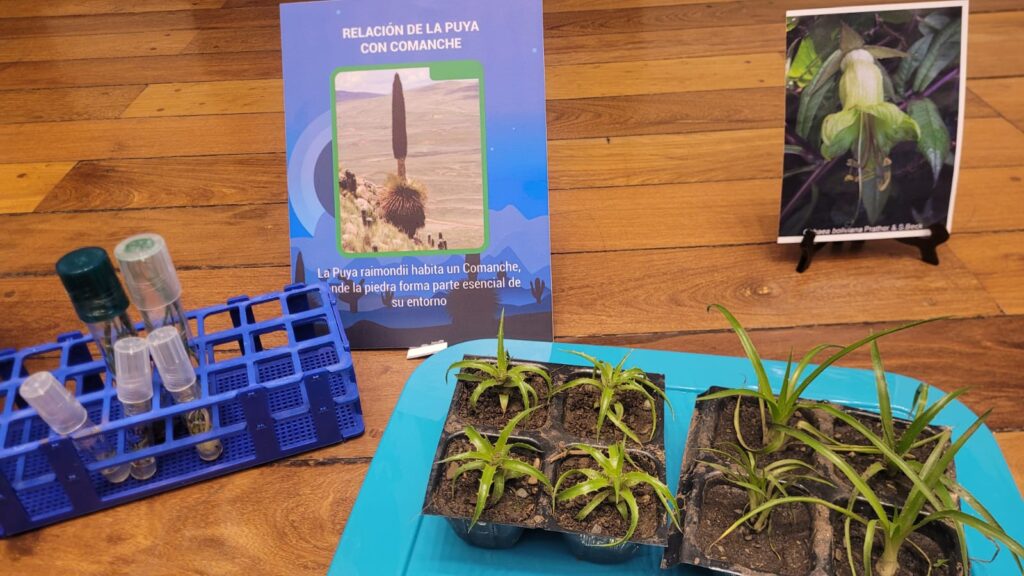
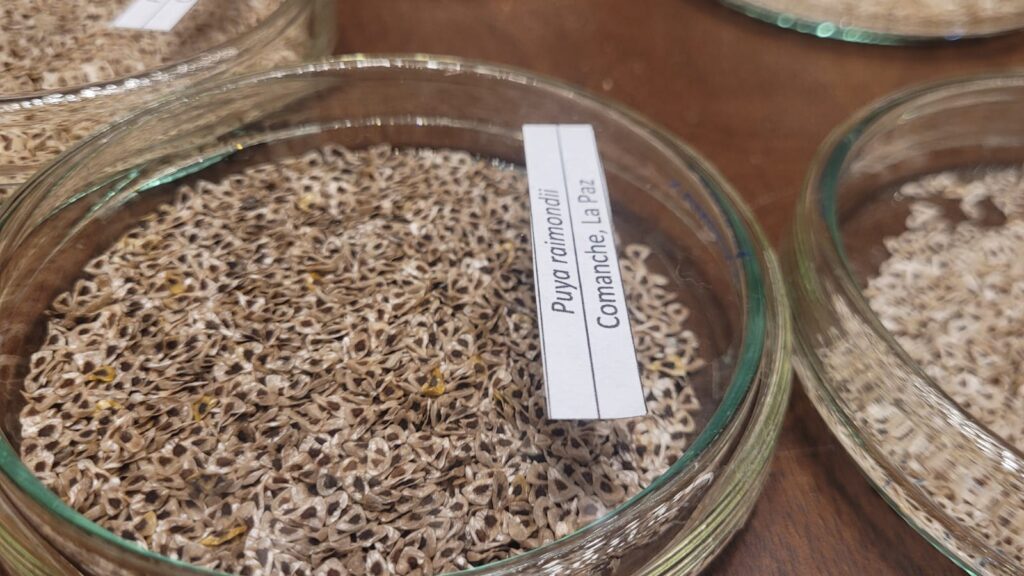
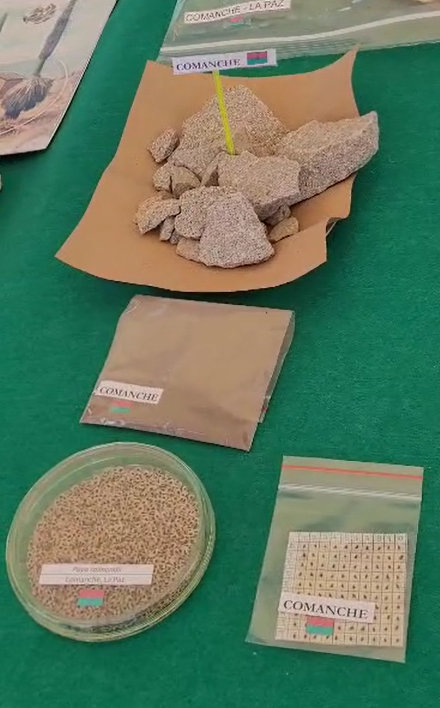
Puyas planted in the laboratory, collected seeds and Comanche granite stone.
3. Intergenerational and Inclusive Environmental Education
The project worked with more than 200 girls, boys, and young people through playful activities, art, and games that facilitated understanding of the ecological value of Puya raimondii. These methodologies strengthened community awareness and promoted early ownership of conservation efforts.
“Students recognize Puya raimondii as part of their identity. We have seen genuine interest in learning about it and conserving it, even though it is a plant, which can sometimes be more difficult to teach. Girls, boys, and young people have taken ownership of the knowledge about Puya raimondii,” noted Tatiana Miranda, representative of the education component.
Sara, a 3rd-year secondary school student, added: “Puya raimondii is important to my community. Through the project, we learned how long it lives, how tall it grows, and where Puya raimondii is found. I am interested in becoming a protector of the puyas to take care of my town and because it can be a source of tourism.”
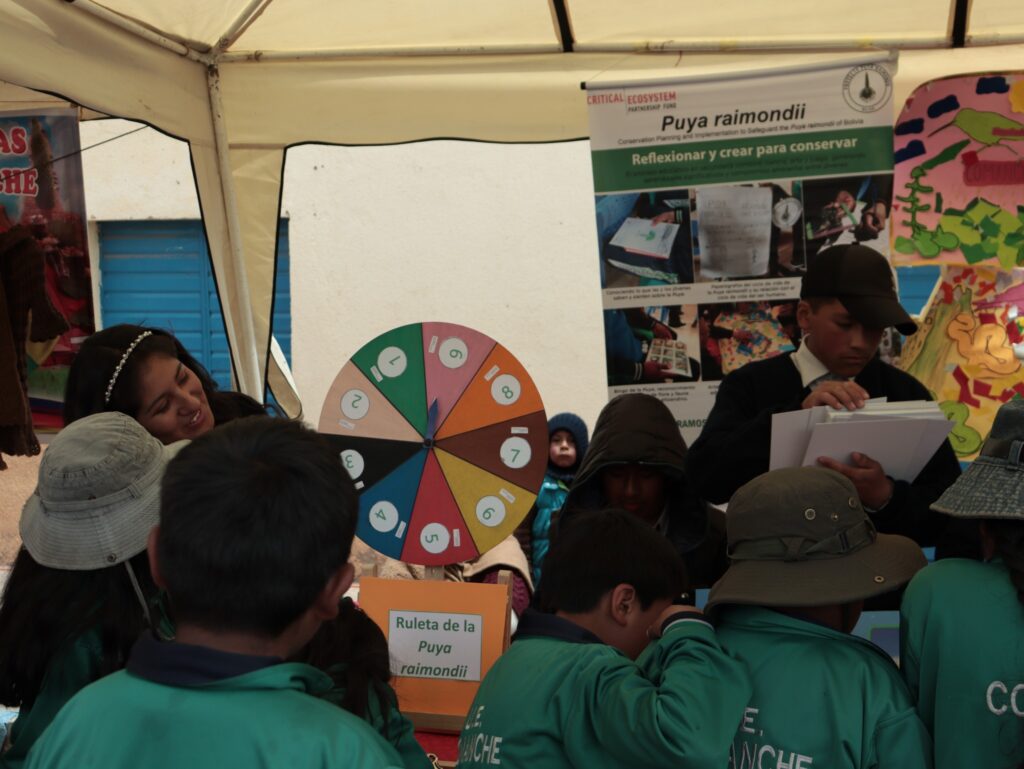
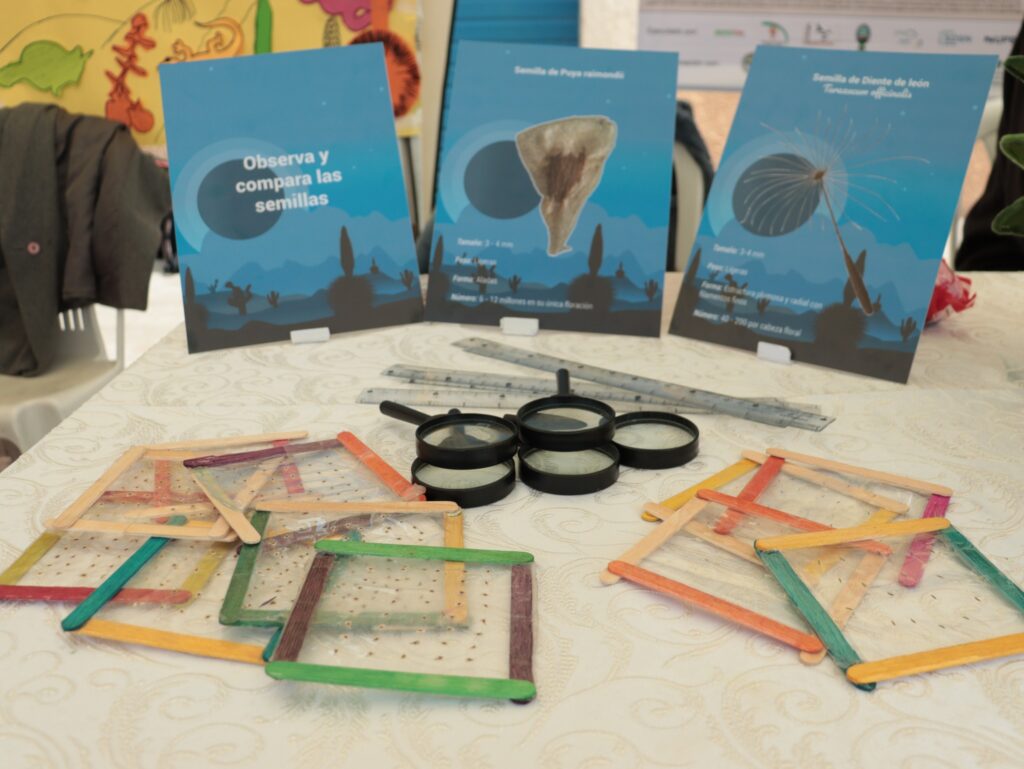
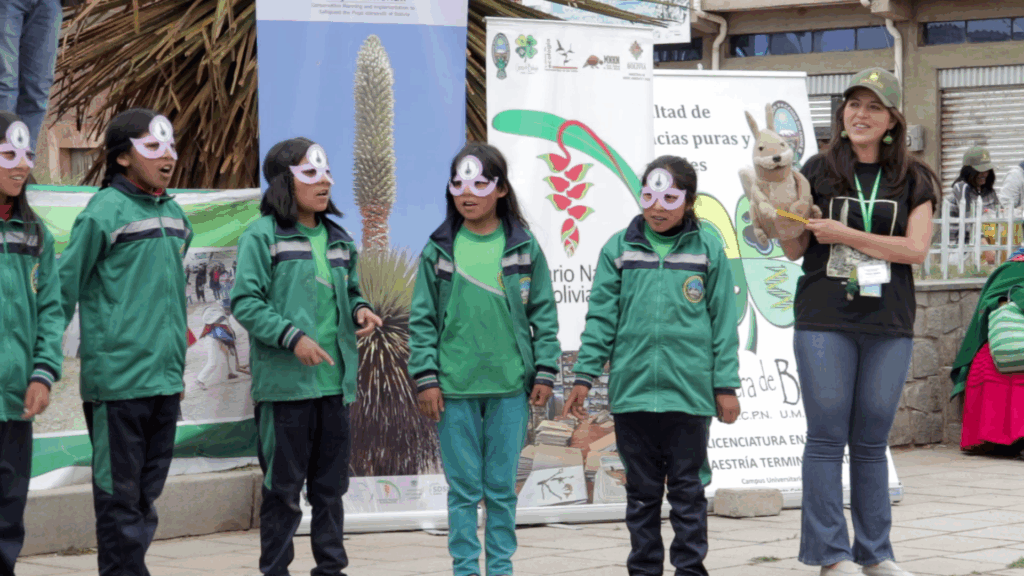
Children and adolescents identify with the Puya raimondii.
4. Sustainable and Inclusive Community-Based Tourism
“The active participation of the community—especially women—was key to identifying Comanche’s attractions and creating a tourist route based on their stories. This process strengthened local identity and cultural and conservation values,” emphasized Daniela Cubas, coordinator of the tourism component.
Results of the Tourism Component:
- Establishment of the Comanche Sustainable Tourism Development Committee (CDTS), with 55% female representation.
- 10 training workshops in tour guiding, gastronomy, handicrafts, ecotourism, photography, customer service, and strategic planning.
- 79 people trained.
- Creation of a seven-stop tourist route that allows visitors to explore Comanche’s main attractions in a full-day tour.
“Through the project, we have revalued Puya raimondii. Tourism helps us by generating income through handicrafts, gastronomy, and transportation. We have learned to work with quality and warmth, with care and love,” stated Maclovia García, councilwoman of the Municipality of Comanche and President of the CDTS.
“Now girls, boys, and young people talk about Puya raimondii; they no longer uproot it, they conserve it and care for it. Tourism has opened doors to showcase our gastronomy, handicrafts, and the richness of Comanche,” added Rosmeri Condori Mamani, representative of the gastronomy sector.
Comanche consolidates a vision that integrates conservation, identity, and economic opportunities, especially for women and young people. The tourist route will continue welcoming visitors interested in learning about Puya raimondii, granite stone, local history, and the biodiversity of the territory.
For more information on how to get to Comanche and learn about its tourism activities, interested visitors can scan the QR code or visit the official platforms of Comanche Turístico.

FB: facebook.com/comanche.turismo
IG: instagram.com/comancheturistico
Comanche, a Certified Local Destination of Bolivia
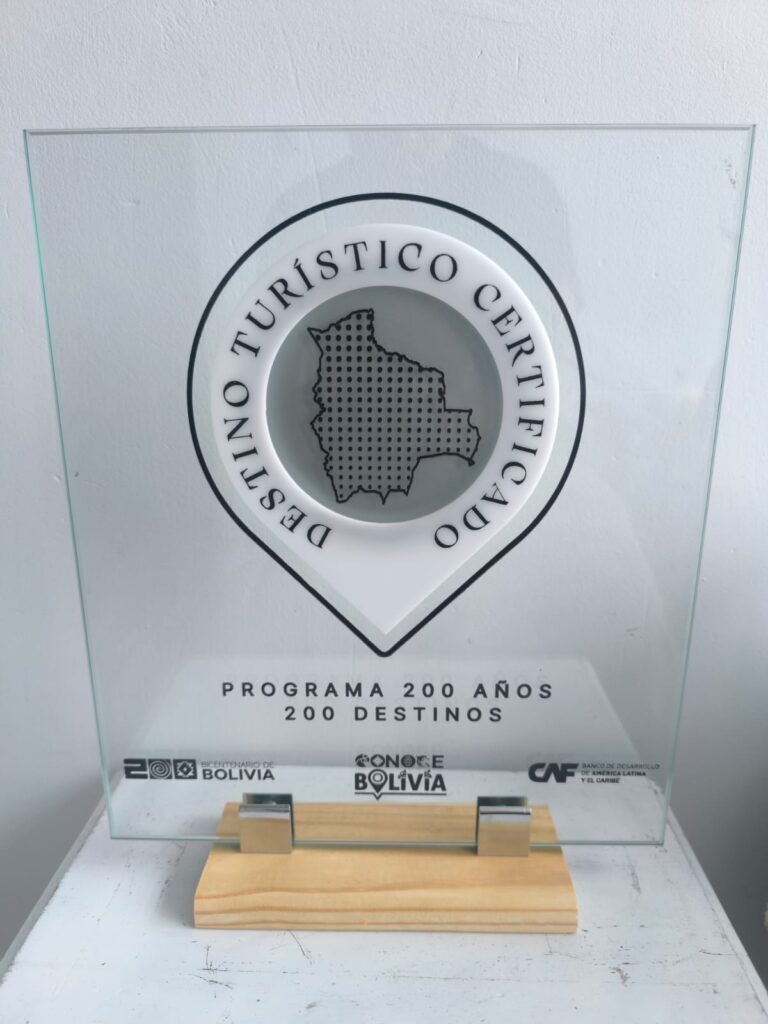
As part of this tourism-strengthening process, Comanche has been officially recognized as a Certified Local Tourist Destination of Bolivia.
The Autonomous Municipal Government of Comanche obtained this certification granted by the Decentralized Entity CONOCE BOLIVIA, within the framework of the program “200 Years, 200 Destinations.”
This recognition validates the municipality’s commitment to sustainable tourism development, the preservation of natural and cultural resources, and highlights Comanche as a key location in the tourism development of the department of La Paz. The certification also serves as institutional support that strengthens the implementation of the new tourist trail and the community initiatives promoted throughout the project.o.
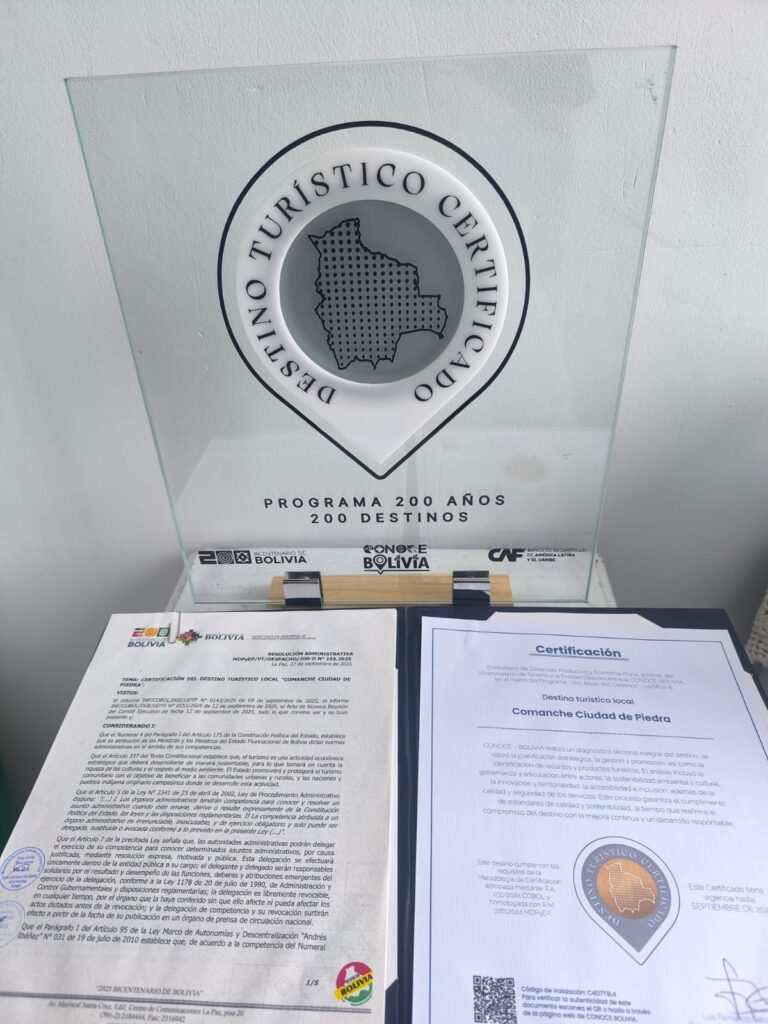
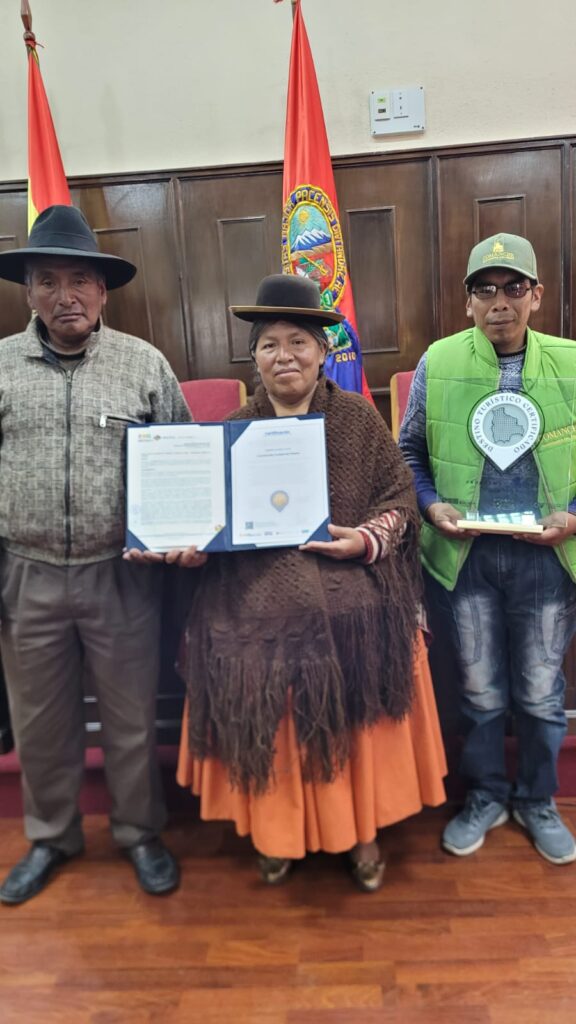
The project “Conservation Planning and Implementation to Safeguard the Puya raimondii of Bolivia” is implemented by BIOTA, SDSN Bolivia, and the National Herbarium of Bolivia. It is funded by the Critical Ecosystem Partnership Fund (CEPF), a joint initiative of the French Development Agency, Conservation International, the European Union, the Hans Wilsdorf Foundation, the Global Environment Facility, the Government of Japan, and the World Bank. The CEPF program in the Tropical Andes is funded by the Government of Canada through Global Affairs Canada. The fundamental goal is to ensure that civil society is engaged in conserving biodiversity.