Español


By: Andrea Fossati
September 17th, 2025
La Paz, Bolivia

Michele Zador, Portfolio Director of CEPF, together with community members and authorities of Comanche.
On Saturday, September 13, a pilot tour was carried out in the community of Comanche, with the participation of five tourism specialists and Michelle Zador, CEPF Portfolio Director for the Tropical Andes Hotspot. The activity was organized by the tourism component of the project “Conservation Planning and Implementation to Safeguard the Puya raimondii of Bolivia.”
The route, called “Comanche – Guardians of Time,” was designed as a full-day experience, departing from the city of La Paz at 07:15 and returning at approximately 17:00. The itinerary included experiences linked to the community’s natural, cultural, and gastronomic heritage.


Activities planned for the day tour
Visitors began the day with a visit to the Mirikiri Institute, known for its granite stone sculptures, followed by an observation of the preparation of watia, a traditional dish prepared in Comanche, and a stop at the main square, where local artisans displayed their textiles and the history and culture of Comanche were contextualized.
The most anticipated highlight of the tour was the interpretive hike on Cerro Comanche, which allowed participants to appreciate the majesty of Puya raimondii growing among rocky formations, framed by unique landscapes. The route also included the granite quarry, with explanations of its historical and current uses, and the Comanche hacienda, where the architectural and productive heritage of the region was explored.
The experience was complemented by local gastronomy, featuring the preparation of the traditional watia by Rosmery Condori, representative of the community gastronomy area, who offered a lunch prepared with local products. This moment allowed all visitors to share the experience of being in Comanche.
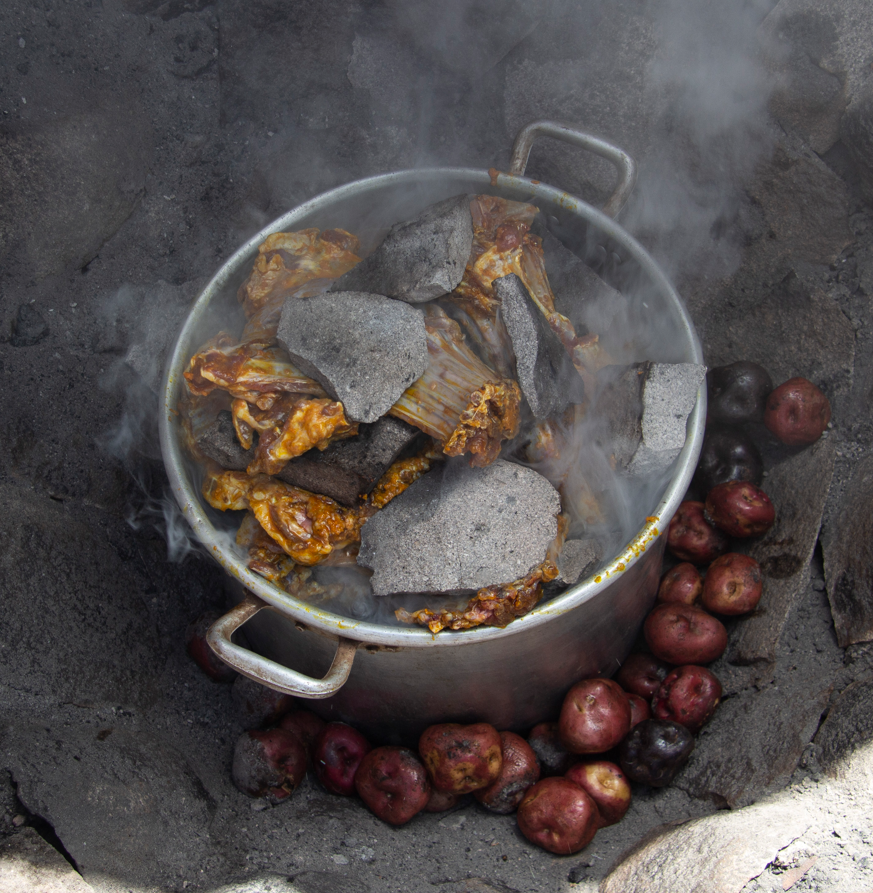


A diversity of experiences surrounding the gastronomy and customs of Comanche
“It is impressive that Puya raimondii grows on rock. Tourism is a way to help maintain and preserve what is being showcased, whether cultural or natural heritage. It also allows the community to benefit from it without degrading their environment. It is important for the community to be an active part of the route and not just a passive observer,” emphasized Andrés Agudo, Project Manager.
Along the same lines, Tania Paredes Quiroga, with 30 years of experience in tourism, stated:
“The landscape that Comanche offers is incredible—the color of the puyas and the contrast with the clear sky. Tourism must be linked to conservation; that is the gateway to successful sustainable tourism. Comanche’s tourism potential is unique because of the presence of Puya raimondii.”
For her part, Marcelina Casiro Chura, a community member of Comanche, expressed: “Today the visit of the tourists who arrived has been very beautiful. I hope they always come, so that we can welcome them with care and a hug. We work and struggle for our community and our people. Now, as a Bartolina, our wish is that projects prosper, that people get to know our land and our culture. We are grateful that you are here.”
Michelle Zador highlighted the importance of conservation efforts: “Puya raimondii is a threatened species, and CEPF is a fund dedicated to the protection of endangered species. We recognize that Comanche is carrying out important actions for its care and is a community open to collaboration, which is why we are funding this project. We hope that the conservation of the Puya will help save the species—essential for global biodiversity—and that the community will also benefit through sustainable development.”

The artisans of Comanche gave Michele a sheep’s wool blanket as a gift.
Soon, the tour will be available to all those interested in experiencing community-based tourism in Comanche and getting to know up close the impressive and unique Puya raimondii. This route invites visitors to connect with the living memory of a community that proudly and respectfully safeguards its natural and cultural treasures.

Tourism brand developed for Comanche
The project “Conservation Planning and Implementation to Safeguard the Puya raimondii of Bolivia” is implemented by BIOTA, SDSN Bolivia, and the National Herbarium of Bolivia. It is funded by the Critical Ecosystem Partnership Fund (CEPF), a joint initiative of the French Development Agency, Conservation International, the European Union, the Hans Wilsdorf Foundation, the Global Environment Facility, the Government of Japan, and the World Bank. The CEPF program in the Tropical Andes is funded by the Government of Canada through Global Affairs Canada. The fundamental goal is to ensure that civil society is engaged in conserving biodiversity.